

How to Annotate Poems for Performing Spoken Word Poetry

How to Annotate Poems for Performing Spoken Word Poetry
Spoken word poetry lives in the voice, body, and breath—not just on the page. While literary annotation helps you unpack meaning, annotating for performance turns the poem into a roadmap for delivery. It guides your pacing, volume, tone, emphasis, pauses, and even gestures so the audience doesn't just hear your words—they feel them.
Whether you're preparing for a poetry slam, open mic, or simply crafting custom poetry for a special event, thoughtful annotation bridges the gap between the written poem and a captivating live delivery. Many poets now create personalized poetry tailored to specific audiences or occasions, making performance annotation even more essential for bringing those unique pieces to life.
Step 1: Read (and Listen) Multiple Times Without Marking
Start by experiencing the poem as an audience member would.
Read it silently once or twice to grasp the overall story, emotion, and flow.
Read it aloud several times. Notice where your voice naturally rises or falls, where you stumble, or where certain lines beg to be shouted or whispered.
Record yourself reading it casually. Play it back and ask: What feels powerful? Where does the energy drop? What emotions emerge?
This initial pass reveals the poem's natural rhythm before you impose performance choices. Don't annotate yet—let the poem breathe. This is especially useful when working with personalized poetry, where every line carries intimate meaning that deserves authentic delivery.
Step 2: Understand the Poem Deeply (Literary Foundation)
Performance without understanding falls flat. Annotate for meaning first.
Paraphrase each stanza or section in your own words in the margins. Who is speaking? What's the core message or emotional arc?
Identify themes and tone shifts. Note the overall mood (angry, nostalgic, defiant, tender) and mark where it changes. A sudden shift in tone can signal a dramatic vocal or gestural pivot.
Clarify vocabulary and references. Underline unfamiliar words, look them up, and jot simple synonyms or explanations. Mispronouncing or misunderstanding a word kills authenticity.
Highlight figurative language. Circle metaphors, similes, alliteration, assonance, or repetition. These are gold for performance—repetition can build rhythm and emphasis, while vivid imagery invites you to paint pictures with your voice and body.
Ask: How does this device serve the emotion or story? A metaphor about breaking waves might call for a rolling, building delivery. When creating custom poetry, this deep understanding ensures the performance honors the personal story behind the words.
Step 3: Mark the Sound and Structure for Delivery
Now shift focus to how the poem will sound and feel when performed.
Line breaks and enjambment: End-stopped lines (with punctuation) often invite natural pauses. Enjambed lines (thought continuing to the next line) can create urgency or momentum—mark these to decide whether to rush through or add a dramatic beat.
Pacing notes: Use slashes (/) for short pauses (breath), double slashes (//) for longer dramatic pauses, or arrows to indicate speeding up or slowing down. Fast pacing can convey excitement or anger; slow pacing builds intimacy or gravity.
Emphasis and stress: Underline or bold key words/phrases you want to hit harder. Capitalize or add exclamation marks for shouted emphasis. Think about which syllables to stress for natural rhythm (e.g., internal rhymes or alliteration).
Volume and dynamics: Write "soft/whisper," "build," "loud/crescendo," or "fade" next to sections. Contrast in volume keeps the audience engaged—dropping to a whisper after a roar is powerful.
Tone and inflection: Label emotional delivery in the margins: "sarcastic," "tender," "urgent," "reflective," "defiant." Note where your voice should rise in pitch (questioning, excitement) or fall (resolution, sadness).
Pay special attention to repetition—these lines often deserve special treatment, like increasing intensity with each repeat or varying the tone to show progression. This technique shines when performing personalized poetry that speaks directly to someone's life experiences.
Step 4: Add Performance Cues for Body and Breath
Spoken word is physical. Your annotations should remind you how to inhabit the poem.
Breath marks: Note where to breathe naturally so you don't run out of air mid-line. Mark strategic inhales before big moments.
Gestures and movement: Use simple symbols or notes like "point," "open hands," "step forward," "clench fist," or "eye contact here." Tie gestures to imagery—mime "shattering" on a breaking metaphor, or spread your arms wide on expansive lines.
Facial expressions and eye contact: Jot cues like "smile ironically," "stare intensely," or "look away vulnerably" for emotional connection.
Overall energy arc: Map the poem's emotional journey. Where does it build to a climax? Where does it resolve? Annotate rising action with upward arrows and denouement with calming notes.
These physical cues help make custom poetry feel alive and tailored not just in words, but in full-bodied expression.
Step 5: Use a Consistent Annotation System
Create a simple, easy-to-read key so your marks are quick to interpret even under stage lights or when nerves kick in. Here’s an expanded set of useful annotation marks:
/ or // — short breath pause or longer dramatic pause
/// — full stop or significant silence for effect
Underline — emphasize or stress the word/phrase
Double underline — strong emphasis or emotional peak
CAPS or ! — louder delivery or shouted emphasis
Italics or wavy underline — softer, whispered, or intimate delivery
↑ — raise pitch or volume (build energy)
↓ — lower pitch or volume (calm or resolve)
→ — speed up the pacing
← — slow down the pacing
~ — drawn-out or elongated pronunciation (for emphasis or musicality)
Bold — key thematic words or emotional anchors
(gesture) or simple icons like ✋ (hand movement), 👀 (eye contact), or 🔥 (high energy)
Color coding (if using printed copies): Blue for pacing, red for emotion/intensity, green for gestures/body cues, purple for tone shifts
Margin notes for specific instructions, such as "tender here," "build anger," "pause for laughter," or "connect with audience"
Print multiple copies if needed—one for initial literary notes, one for performance marks. This flexible system works beautifully for both published pieces and your own personalized poetry creations.
Step 6: Rehearse with Your Annotations and Refine
Annotation isn't final—it's a living document.
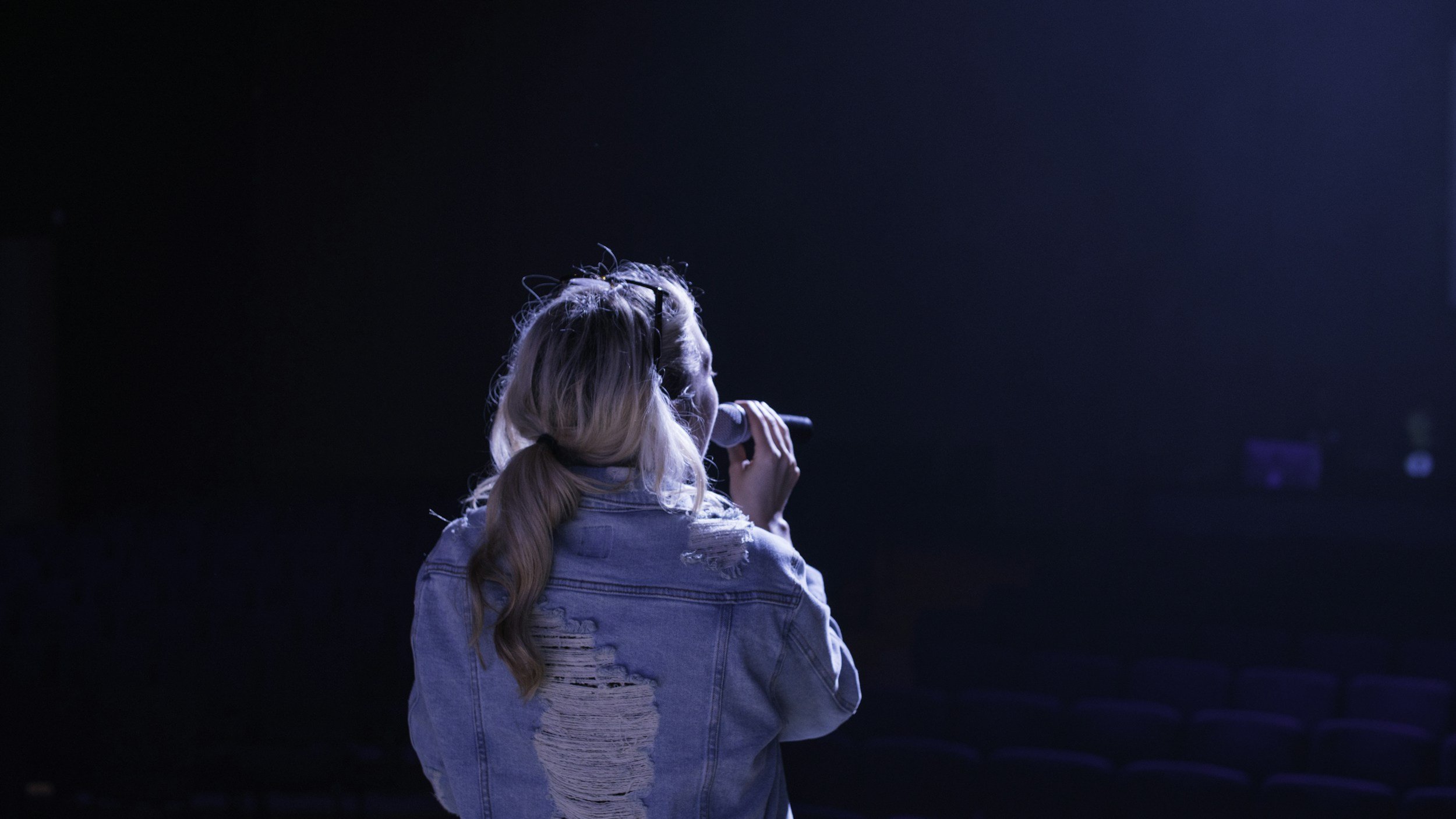
Practice reading with your marks. Record video of yourself performing.
Watch it back: Does the delivery match the emotion? Are pauses landing? Is the energy consistent?
Adjust as you rehearse. Some lines may need more (or less) emphasis once spoken aloud. Audience feedback at open mics can reveal what works.
Memorize using the annotations as a scaffold, then gradually internalize the cues so the performance feels organic rather than mechanical.
Bonus Tips for Spoken Word Success
Write for the ear: When creating or revising your own poems, read aloud early. Spoken word thrives on rhythm, repetition, and sensory details that evoke images—perfect for developing custom poetry commissions.
Balance authenticity and craft: Don't force emotions—let the poem's truth guide you. Over-acting can feel insincere; subtle shifts in voice and body often hit harder, especially in personalized poetry meant to touch a specific heart.
Practice dynamics: Vary pace, volume, and tone deliberately. Monotone delivery loses audiences quickly.
Connect with the room: Use eye contact, stance, and gestures to draw listeners in. Your annotations should support that connection, not distract from it.
Study the masters: Watch performances by artists like Taylor Mali, Sarah Kay, or Rudy Francisco. Notice how they use pauses, builds, and vocal variety—then apply similar analysis to your own work or when crafting custom poetry for others.
Annotating for spoken word transforms a static poem into a dynamic experience. It turns analysis into action and meaning into movement. The more you practice this process, the more instinctive your performances will become—until the annotations live in your bones rather than just on the page.
Whether you're performing classics or creating personalized poetry that captures someone's unique story, start with one poem today. Read it, mark it, speak it, and feel the difference. Your voice is the instrument; annotation is how you tune it.
What poem are you preparing next? Are you working on custom poetry for an event or client? Drop your tips or favorite spoken word pieces in the comments—I'd love to hear how you annotate for performance.
