

How to Write Poetry: A Gentle Guide for Beginners (No Rules Required)
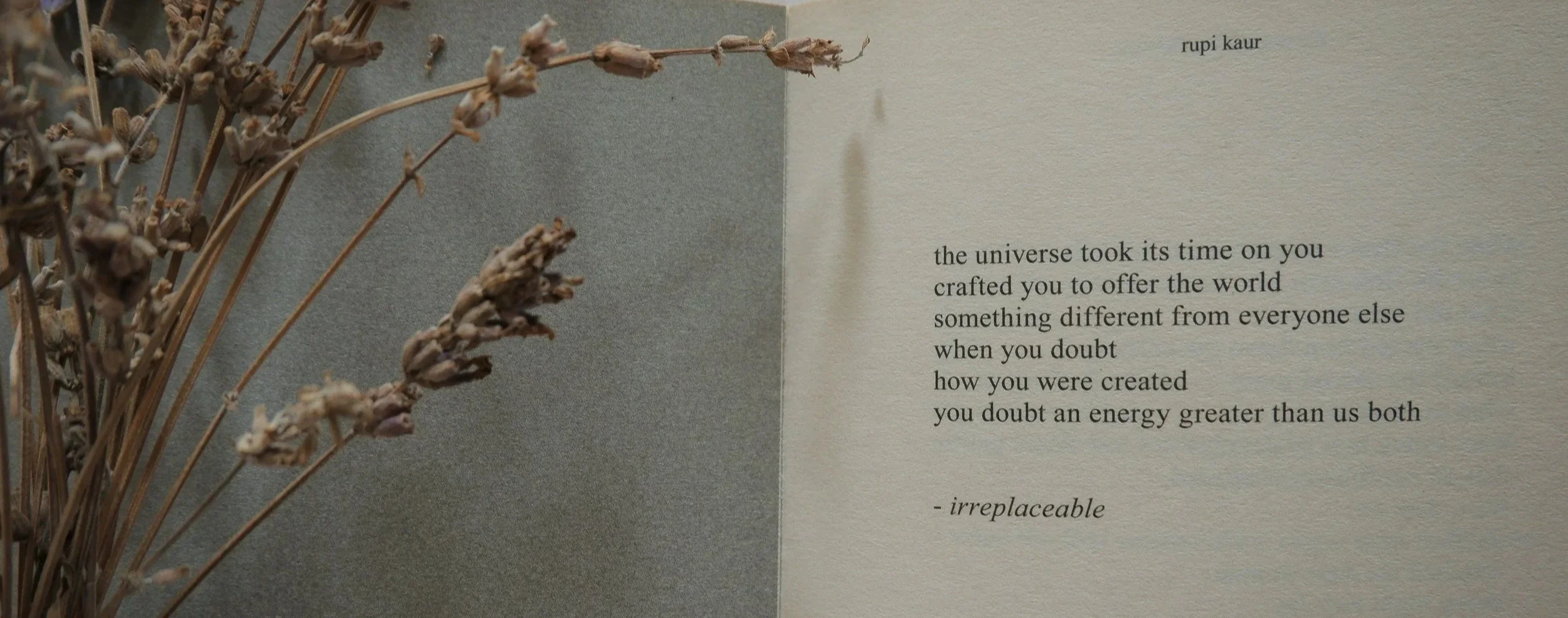
Poem by Rupi Kaur
How to Write Poetry: A Gentle Guide for Beginners (No Rules Required)
Poetry often feels intimidating—like it demands perfect metaphors, flawless rhythm, or years of suffering in a Parisian garret. The truth is simpler: poetry is just a way of paying fierce attention to the world and then arranging your noticing into lines that feel alive.
Anyone can start writing poems today, either for yourself or you can even try writing custom/personalized poetry for someone else! You don't need permission, talent from birth, or a thesaurus. You mostly need curiosity, a bit of courage, and willingness to write things that might be terrible at first (they will be—and that's okay).
Here’s a step-by-step approach that works whether you're 14 or 74, writing for yourself or dreaming of publication.
1. Start by Reading (Steal Like an Artist)
The fastest way to learn poetry is to read it voraciously—not as homework, but like you're eavesdropping on other people's most honest thoughts.
Begin with poets who feel accessible rather than academic:
Mary Oliver (nature, wonder, clarity)
Rupi Kaur or Amanda Gorman (modern, emotional, direct)
Ocean Vuong, Ada Limón, or Ross Gay (contemporary lyricism)
Classic entry points: Langston Hughes, Emily Dickinson, Pablo Neruda
Read aloud. Pay attention to what lines make your chest tighten, what images stick like burrs, what rhythms feel like breathing. Ask: How did they do that?
Over time, poetry seeps into your "animal brain" (as one writer beautifully put it). You begin to notice line breaks, repetition, white space.
You can read some examples of my custom poems here > Custom Poetry Examples
2. Lower the Stakes: Give Yourself Permission to Write Badly
Most first (and second, and tenth) drafts are messy. That's not failure; that's material.
Set a tiny goal:
Write for 7 minutes without stopping
Fill one page with whatever comes
Describe the view out your window right now using only concrete nouns and verbs
No rhyming required. No deep meaning mandatory. Just motion.
Robert Frost said a poem "begins in delight and ends in wisdom." You don't have to reach wisdom on day one. Delight in playing with words is enough.
3. Choose Something That Matters (Even a Little)
The strongest poems usually grow from emotion or observation that won't leave you alone.
Common powerful starters:
A specific memory (the smell of your grandmother's kitchen, not "childhood" in general)
A current feeling (restlessness at 2 a.m., the ache after an argument)
An object that carries weight (a cracked mug, a childhood toy, your phone screen at night)
Nature observed closely (the way rain beads on a car window, not "the beauty of nature")
If it matters to you, it can matter to someone else.

The clouds met the horizon in a symphony of color
4. Build with the Basic Tools (No Fancy Equipment Needed)
Here are the most useful beginner building blocks:
Imagery — Show, don't tell. Instead of "I was sad," try "Rain tapped the roof like impatient fingers."
Line breaks — These are your most powerful free tool. They create rhythm, emphasis, surprise. Example: The coffee cooled while I stared at the place you used to sit
vs. The coffee cooled while I stared at the place you used to sit.
Same words → very different feeling.
Sound — Read aloud. Alliteration (same starting sounds), assonance (vowel echoes), consonance (consonant echoes) make lines memorable. "Soft silver shadows slip" feels different from "quiet gray ghosts glide."
Metaphor / Simile — Compare unlike things. "Her laugh was broken glass" vs. "Her laugh was like broken glass."
Compression — Say less, imply more. Cut every word that isn't earning its keep.
Rhyme and meter are optional bonuses, not requirements. Many contemporary poems skip them entirely.
5. A Simple First Exercise (Try It Right Now)
Pick one:
Describe an ordinary object in your room for 10 lines as if it's the most important thing in the world.
Write about a recent emotion using only sensory details (sight, sound, smell, taste, touch)—no naming the emotion itself.
Take a memory. List 15 concrete details from it. Then shape the best 8–10 into lines.
Example quick starter I just wrote:
The porch light hums orange against wet cedar moths drunk on glow circle like tired planets I wait for headlights that never arrive again
Nothing fancy. Just honest noticing.
Check out my FREE Poetry Prompt download for more exercises!
6. Revise Later, Not Now
First draft = spill everything. Second pass = carve away whatever feels false or clichéd. Third pass = read aloud and listen for music.
Mary Oliver advised: be specific. Avoid vague words like "beautiful," "sad," "lovely." Get precise.
7. Keep Going (The Real Secret)
Write regularly, even badly. Share with kind friends or online communities (r/Poetry, local open mics, small workshops). Listen to feedback, but trust your own ear most.
Poetry isn't about being "good" right away. It's about staying with the practice long enough that your unique way of seeing the world starts showing up on the page.
As Anne Sexton once instructed herself: "Whatever you do, don't be boring."
You’ve got this.
Now go write something only you could write.
What’s the first small thing you notice right now that might become a poem? Grab a notebook (or your phone notes) and start. The world is waiting to hear how you say it. 🌿
Bonus: Try Writing a poem for someone else!
Sometimes, the best place for me to start is by writing a personalized poem for someone I love. When I’m feeling stuck, I often find it easier to draw inspiration from thinking about someone else.
Plus, they will have a beautiful memento to carry with them forever 💕
You can also check out my FREE Poetry Prompt Pack download for some more poem starters, to get you on your way writing custom poetry like a pro!
If you’re stuck, let me write a custom poem for you!
I write custom and personalized poetry for all of life’s endeavors! Check out some examples here > Custom Poetry Examples
